Episode 7
19:51
Listen
The ideas, argued.
Three shows, one argument. The Debaters fight about whether the ideas survive contact with reality. The Interpreters talk each essay through, end to end. Behind the Build is the diary of making this in real time.
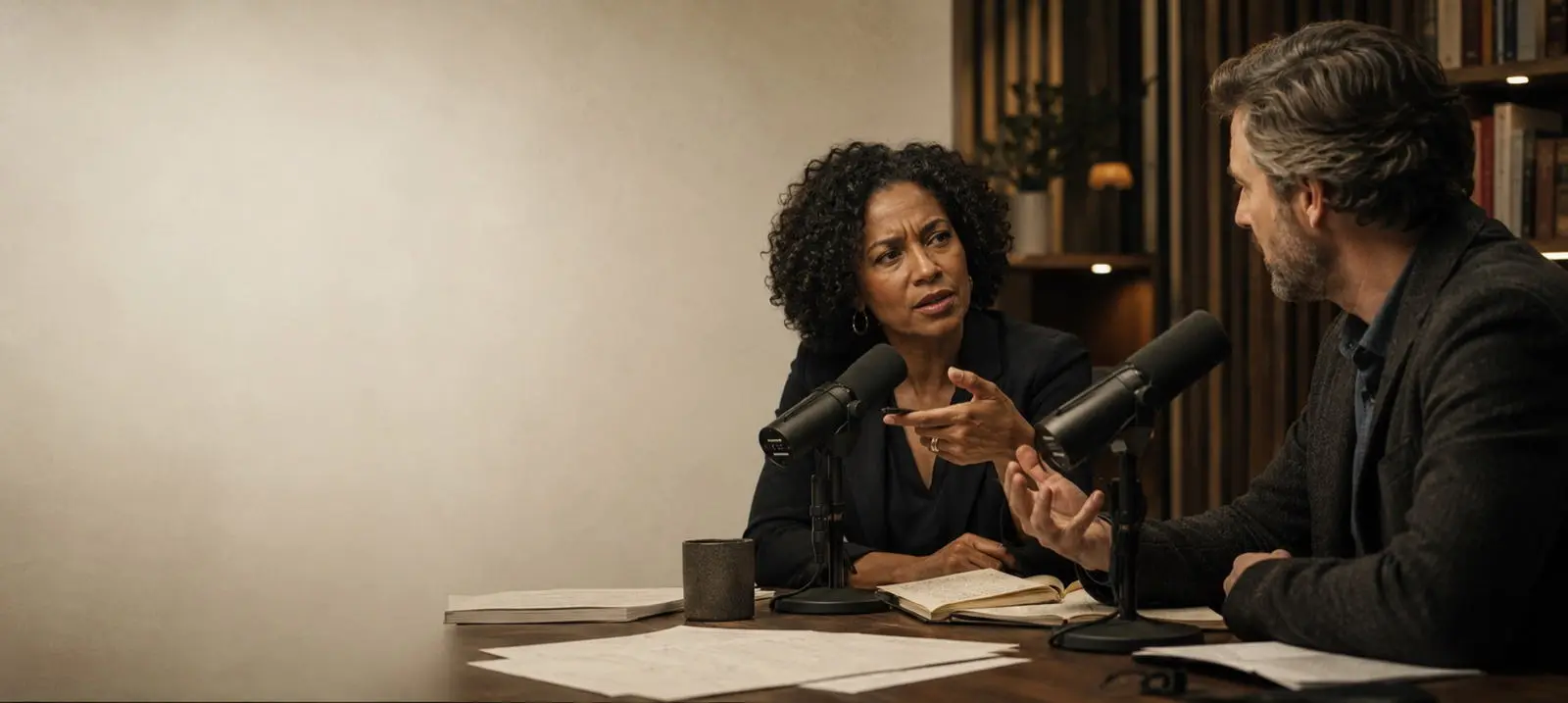
Maya Brooks and Daniel Ross
They argue about whether it holds up.
Maya wants it proven. Daniel will entertain what everyone else dismisses. We let them fight it out in public, unscripted.
Episode 1
20 min
Can Forced Generosity Fix Social Media?
The model makes every winner give half away. Daniel says built-in generosity is the only thing that reliably changes behavior at scale. Maya says generosity you are forced into is just a tax wearing a halo. They fight over whether you can engineer virtue, or only fake it.
Episode 2
18 min
Making the Internet Difficult on Purpose
Friction as a feature. Daniel says making the internet slower protects what matters. Maya says difficulty can become its own vanity. They fight over whether restraint is design, or just another obstacle.
Episode 3
22 min
Selling Sacred Memories with Bathroom Humor
A serious memory platform walks into a bathroom sketch. Maya says Totally Joking torches the credibility. Daniel says the bathroom is exactly why anyone is paying attention. They fight over whether absurdity weakens the idea, or proves it can survive contact.
Episode 4
21 min
The Death of the Performance Internet
The performance internet looks exhausted. Daniel says social media’s promise collapsed and something post-performance is coming. Maya says people still love the stage. They fight over whether fatigue is an ending, or just the cost of staying online.
Episode 5
23 min
Is Your Smartphone History or Noise?
Your phone has recorded more of your life than any person in history ever could. Daniel calls it the richest archive ever made. Maya calls it noise: ten thousand photos nobody will ever open. They fight over whether capturing everything is memory, or the death of it.
Episode 6
24 min
Outsourcing the Labor of Remembering
Machines can remember more than we can. Daniel says outsourcing memory is the point of civilization. Maya says convenience can quietly become amnesia. They fight over whether a life remembered by software is remembered by anyone at all.
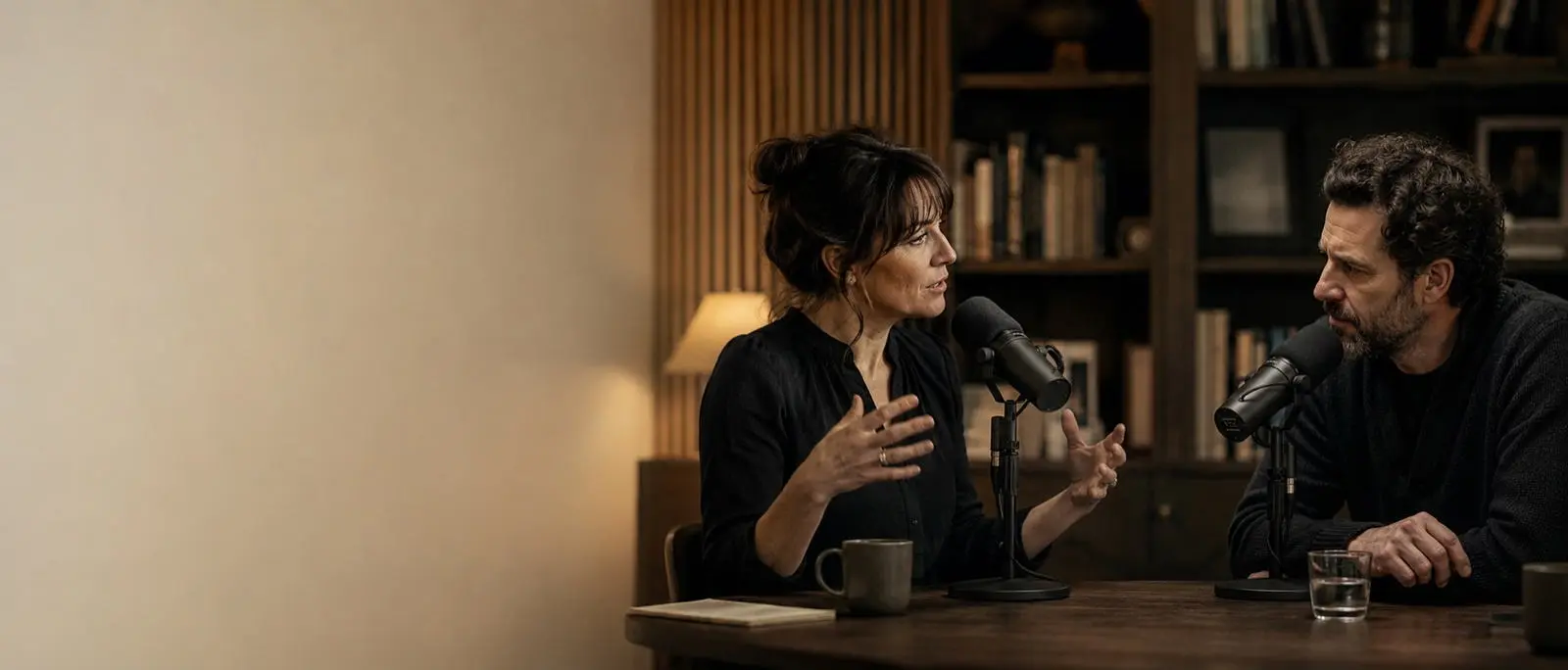
Iris Hart and Theo Reed
They explain the ideas.
One sees where an idea could go. The other wants to know what it looks like on a Tuesday morning. Between them, nothing stays vague.
Episode 5
41:26
Tearing Down the Internet’s Attention Factory
Episode 1
42 min
Leaked Blueprints for a Tech Extortion Machine
The attention economy taken apart like a machine on a workbench: the moving parts that turn your time, your data, and the people you love into someone else’s profit, and why every piece of it was a choice and not a law of nature.
Episode 2
26 min
An Internet Designed to Circulate Value
The system, in one conversation: why an extraction economy was never the only option, and what an internet built to circulate value instead of hoard it actually looks like.
Episode 3
48 min
Recognition Media and the Memory Crisis
The fullest telling of the whole idea: why we record everything and remember nothing, what changes when anyone can make anything, and the case for recognition over performance.
Episode 4
22 min
A New Kind of Internet
Replacing the extraction economy with recognition. A long-form conversation on why platforms are built to extract value, and how this one is built to circulate it instead.

Behind the Build.
Most companies show you the launch. This is the part before that. The conversations, revisions, dead ends, and changes of mind as Build Something is built in public, in real time.
Behind the Build21 min
THE LONG VERSION.
Latest Episode
10 min
Claude Exposed: When It Refuses to Help
A candid recording from inside the build: where an AI genuinely helps, where it gets in the way, and why deciding what matters is still the part no machine can do for you.

Episode 1
The early ideas
A field recording from inside the first shape of Build Something: conversations, open questions, and the beginning of the system naming itself.
Watch on YouTube →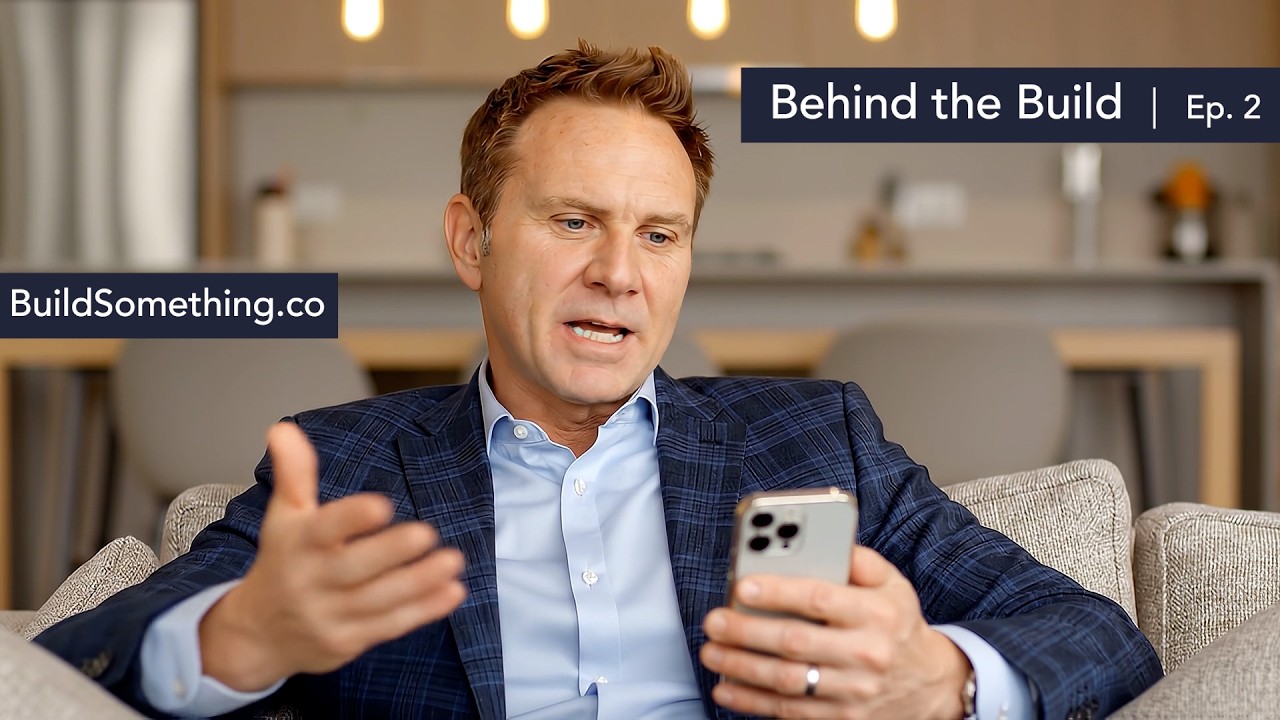
Episode 2
A new tagline, and the Dad-Scaped opening
A revision session on language, tone, and the first public world the company could build around memory, recognition, and ordinary life.
Watch on YouTube →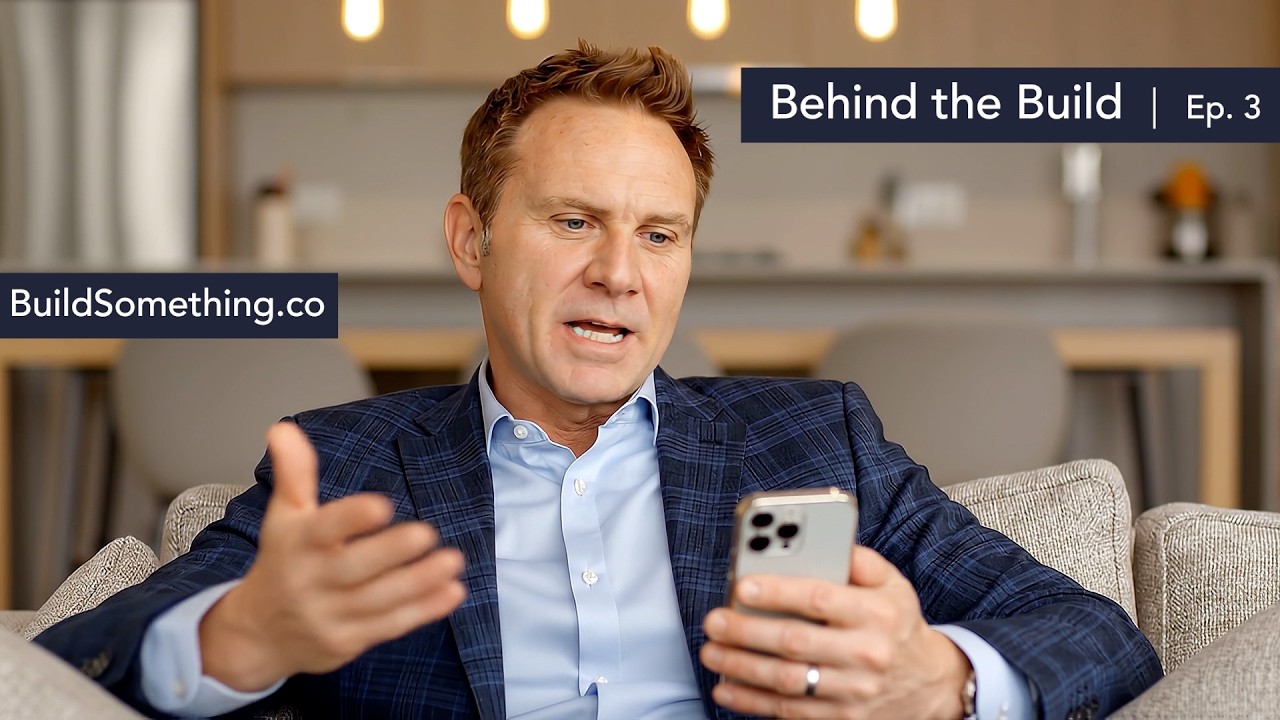
Episode 3
Finding the right builder
A conversation about fit, trust, and the difference between liking the vision and being able to help carry it.
Watch on YouTube →Read it, hear it explained, or hear it argued. Same ideas, three ways in.